
What Is Shock Cavitation? How Air Bubbles Affect Mountain Bike Suspension
Updated: 16 hours ago
By The Shad Co. | Mesa, Arizona
Have you ever turned the compression damping on your mountain bike shock nearly all the way closed and wondered why it still feels surprisingly weak? Maybe the rebound adjustment doesn't seem to do much anymore. Maybe the shock makes a strange squishing or slurping sound. Or perhaps the damping feels different after a few minutes of hard riding than it did when you started.
One possible culprit is cavitation and aeration inside the damper.
These problems are often misunderstood, so let's look at what is happening inside your suspension, what causes it, how you can recognize it, and why regular service matters.
What Is Shock Cavitation?
Your shock or fork damper controls suspension movement by forcing oil through very small passages, ports and valves. Oil is extremely difficult to compress. That's exactly what we want: when the damper piston moves, it forces oil through the damping circuit and creates predictable resistance. Gas behaves very differently. When oil is forced through a restriction at high speed, the pressure in part of the damping circuit can drop dramatically. If the pressure falls far enough, bubbles can form in the oil. When those bubbles subsequently collapse as pressure rises again, the process is called cavitation.
Aeration is closely related but technically different. Aeration is when gas becomes mixed or entrained in the oil. In a real suspension damper, cavitation and aeration can occur together, and both can produce inconsistent or reduced damping.
What you are seeing in this situation is exactly what the damper doesn't want: instead of moving a nearly incompressible column of oil through the valves, it's moving oil containing compressible gas.
An Easy Way to Picture It
Imagine a drinking straw completely filled with water. If you move the water through the straw, you're working against a nearly incompressible fluid. Now imagine that same straw contains water mixed with thousands of tiny air bubbles. Push on it and the air bubbles compress before the fluid can move. That's essentially what happens inside an aerated damper.
Healthy damper
Piston → solid column of oil → damping valve → controlled resistance
Aerated/cavitated damper
Piston → oil + bubbles → damping valve → inconsistent resistance
The damper may still function, but it no longer behaves the way the engineers designed it to.
What Causes Cavitation?
Several factors can contribute.
Low IFP or reservoir pressure
Many rear shocks use an Internal Floating Piston (IFP) or bladder with a gas charge. This keeps positive pressure on the damping oil and helps prevent the oil pressure from dropping low enough to promote cavitation.
FOX has specifically described the nitrogen charge in its shocks as a way to pressurize the IFP and prevent cavitation.
Aggressive damping
The more aggressively oil is forced through a restrictive damping circuit, the larger the pressure differences can become. High shaft speeds, heavy damping tunes and repeated hard impacts can push the system closer to its cavitation limit.
Contaminated or poorly serviced oil
Air can become suspended in oil during service, and contaminated or improperly bled oil can contribute to aeration.
*FOX service procedures actually identify foaming oil as an indication of aeration during shock service.
Damaged seals or internal components
A damaged IFP seal, piston seal or other internal component can allow gas and oil to interact when they should remain separated.
Heat and hard use
Long descents, bike-park riding, downhill riding, e-bikes and other high-use situations put substantially more work through a damper. Manufacturers recommend more frequent service for riders in extreme conditions.
What Does Cavitation Do to Damping?
This is where the rider actually feels the problem.
The spring supports your weight.
The damper controls how the suspension moves.
When the oil contains gas bubbles, those bubbles can compress. Oil cannot.
That means some of the movement that should be producing hydraulic resistance is instead being absorbed by compressing gas.
The result can be:
Reduced compression damping
Reduced rebound damping
A softer or spongier feel
Inconsistent damping between hits
Damping that changes as the shock is repeatedly cycled
Reduced effectiveness of firm or lockout modes
Slurping, squishing or gurgling noises
*FOX specifically notes that unusual noises or oil loss are reasons to stop riding and have a shock inspected.
One of the Biggest Clues: "I Closed the Damping, and Nothing Happened"
One simple thing a rider can notice is a loss of adjustment range.
Close your compression damping adjustment and slowly cycle the suspension. You should normally feel a noticeable change as you move toward the more heavily damped setting. That doesn't mean every shock becomes completely locked out at maximum damping. Most still allow some movement. But if you can go from fully open to fully closed and the difference is surprisingly small, something may be wrong. The same applies to rebound.
Possible causes include:
Aerated or cavitated oil
Low IFP pressure
Internal seal leakage
Contaminated or degraded oil
A damaged damping component
Cavitation isn't the only possible cause, but a sudden loss of damping adjustment is a good reason to inspect the damper instead of simply adding air pressure or another volume spacer.
How Can a Shock Pressurize Itself?
It seems impossible: if there is no intentional IFP charge and no air-spring pressure, where does the pressure come from? The answer is the gas suspended in the oil. When gas becomes dissolved or entrained in the damping oil, the oil is no longer purely liquid. When you repeatedly cycle the shock, the piston compresses that trapped gas. The gas acts like a tiny collection of air springs.
The cavitation didn't magically create pressure. The cycling compressed the gas that had become mixed with the oil.
This is why a severely aerated shock can behave very differently from a properly bled, properly pressurized damper.
Can Cavitation Cause Rust Inside a Shock?
This is an especially important reason not to ignore a damper that is severely aerated or otherwise malfunctioning.
Cavitation itself does not chemically create rust. Rust requires oxidation, and significant corrosion generally requires moisture or water to be present.
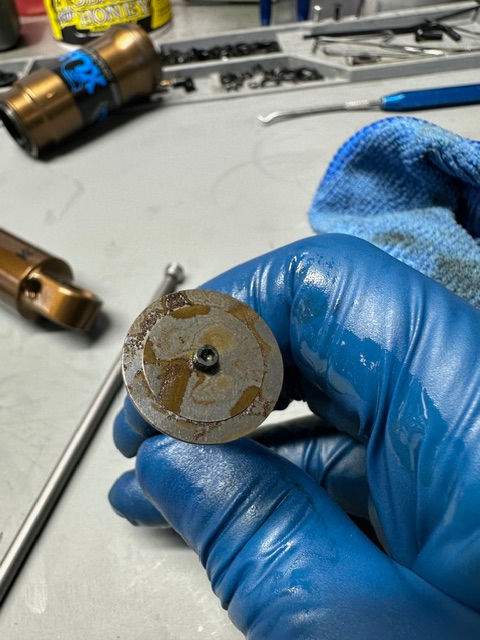
However, a compromised damper can develop conditions that make corrosion much more likely.
A properly maintained shock keeps its damping oil and pressurized gas separated from outside contaminants. If moisture enters the system, or if the wrong gas or contaminated fluid is introduced, internal components can begin to oxidize.
*FOX specifically warns that compressed air can introduce moisture into a shock and cause internal corrosion, which is one reason nitrogen is used in its pressurized systems.
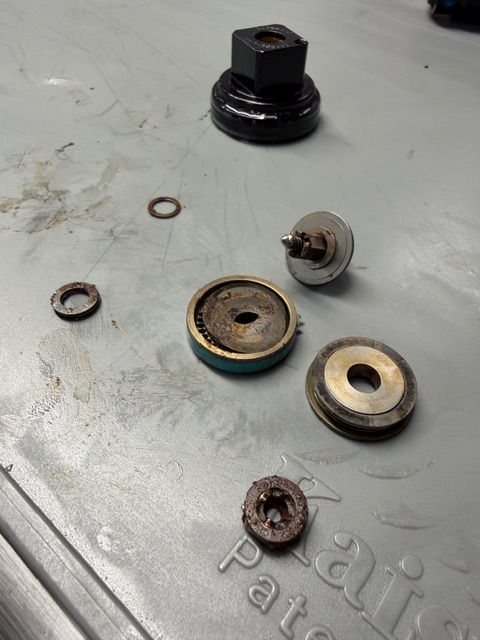
Once corrosion begins, it can damage highly precise surfaces, seals and moving components. Rust particles can also contaminate the oil and circulate through the damping system. So while cavitation isn't the direct chemical cause of rust, leaving a severely aerated or malfunctioning shock in service can allow an underlying contamination or moisture problem to continue until expensive internal damage occurs. That's one more reason to service a shock when its damping performance has clearly changed rather than continuing to ride it until it fails.
Why Does an IFP Help?
An Internal Floating Piston is essentially a movable divider between the gas and the damping oil. As the shock moves, the shaft displaces oil. The IFP moves to accommodate that changing oil volume while maintaining pressure on the fluid. That positive pressure helps keep the oil from reaching extremely low local pressures where cavitation can occur.
In simple terms:
The IFP helps keep the oil under pressure so it behaves like oil instead of turning into a bubbly mixture.
How Often Should You Service Your Suspension?
Service intervals vary by manufacturer and model, so your suspension's service manual should always take priority.
As a general planning guideline:
Rear Shock
Every ride: Wipe dirt from the shock shaft and inspect for leaks or damage.
Around 30–100 hours: Preventative air-sleeve service, depending on the shock and riding conditions.
Around 100–200+ hours: Full damper service, depending on the manufacturer's recommendation.
*FOX, for example, has published intervals ranging from roughly 30 hours for air-sleeve maintenance in some conditions to 100 hours for suspension-fluid service on many older models, while current designs can differ.
Suspension Fork
Every ride: Clean the stanchions and inspect the dust wipers.
Around 50 hours: Lower-leg service is a common manufacturer recommendation.
Around 100–200 hours: Deeper damper and air-spring service, depending on the model.
*RockShox, for example, commonly specifies 50-hour lower-leg service and longer intervals for damper/spring service, with the exact schedule varying by fork.
Dropper Post
Dropper intervals vary considerably by design.
A reasonable starting point is:
25–50 hours: Clean and lubricate as required.
75–200 hours: Preventative service.
250–600 hours: Full rebuild when specified by the manufacturer.
Always check the service interval for your particular post.
The takeaway
Don't wait until your suspension is obviously broken.
Regular service helps maintain small-bump sensitivity, consistent damping, low friction and the overall life of expensive components. Manufacturers also recommend shorter intervals for riders who regularly ride in wet, muddy, dusty or otherwise extreme conditions.
The Bottom Line
Your suspension depends on one surprisingly simple thing:
Oil needs to behave like oil.
When gas gets into the damping circuit, when pressure gets too low, or when the system is pushed beyond what it can maintain without cavitation, the damper can begin operating with a mixture of oil and compressible gas instead of a solid hydraulic column. That's when damping starts to become inconsistent.
So if your shock:
Feels under-damped
Has lost compression or rebound adjustment
Makes unusual squishing or slurping noises
Feels different after repeated hard use
Develops unexpected pressure
Or simply doesn't feel like it used to
Don't automatically reach for more air pressure or another volume spacer.
The problem may be inside the damper.
At The Shad Co. in Mesa, Arizona, we service and diagnose mountain bike suspension with the goal of restoring the performance your fork or shock was designed to deliver.
We service FOX, RockShox, DVO, Öhlins, Cane Creek, Manitou, Marzocchi, Vorsprung and other major suspension systems, including rear shocks, forks and dropper posts.
Need Suspension Service?
Bring your suspension to The Shad Co. in Mesa, Arizona, or use our mail-in suspension service for riders anywhere in the country.
Your suspension doesn't have to be completely broken to need service. Sometimes it just needs to work like it should again.
FAQ: Shock Cavitation
What does cavitation sound like in a mountain bike shock?
Cavitation or aeration can produce squishing, sucking, slurping or gurgling sounds, although noise alone isn't a diagnosis. The bigger concern is unusual noise combined with inconsistent or reduced damping.
Can a shock cavitate without leaking oil?
Yes. Cavitation and aeration can occur without an obvious external oil leak. Gas can come out of solution or become entrained in the oil, while internal seal problems can also allow gas and oil to mix.
Can a shock cavitate with no IFP pressure?
Yes. Insufficient damper pressure makes the oil more vulnerable to low-pressure conditions that can promote cavitation. This is one reason pressurized IFP and bladder systems are used in many modern dampers.
Why has my shock lost compression damping?
Possible causes include aerated oil, cavitation, low IFP pressure, contaminated oil, worn seals or a problem with the damping circuit. A proper inspection is preferable to simply changing spring pressure.
Can air pressure fix cavitation?
Not necessarily. Air pressure primarily changes the shock's spring rate and sag. It doesn't repair an aerated damper or a problem with the IFP or damping circuit.
How often should I service my mountain bike shock?
It depends on the model and manufacturer, but preventative air-sleeve service and full damper service commonly fall somewhere in the 30–200+ hour range. Always use the service schedule for your specific shock.
How often should I service my mountain bike fork?
Many modern forks use approximately 50 hours for lower-leg service, with deeper damper and air-spring service at longer intervals. Check the manufacturer's schedule for your specific fork.


Comments